X-ray Polarization
Polarization contains information about the direction and organization of electromagnetic waves. In compact systems, it can reveal the geometry of accretion flows, magnetic fields, jets, and scattering regions.
High-Energy Astrophysics
I study high-energy astrophysics, with a focus on X-ray polarization from neutron stars and other compact objects. My work combines detector physics, statistical analysis, simulations, and scientific computing to understand the geometry of some of the most energetic systems in the universe.
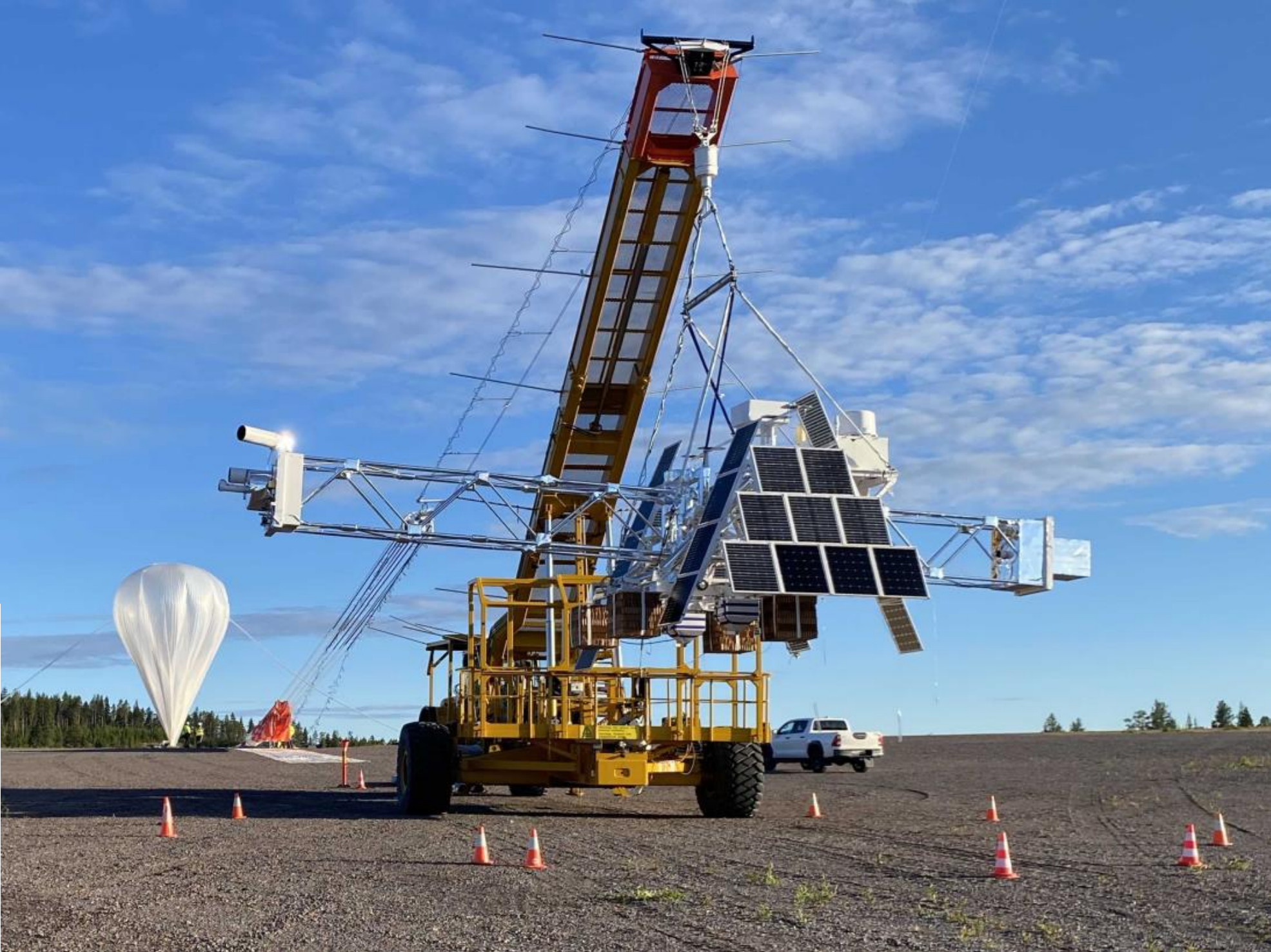
What I Study
Polarization contains information about the direction and organization of electromagnetic waves. In compact systems, it can reveal the geometry of accretion flows, magnetic fields, jets, and scattering regions.
I am particularly interested in neutron stars, pulsars, and X-ray binaries, where strong gravity, rapid rotation, and intense magnetic fields shape the observed emission.
My analysis work includes event-level likelihoods, Monte Carlo simulations, Bayesian inference, MCMC, detector-response modeling, and polarization estimation.
Current Work
My research spans instrument data analysis, statistical method development, and the interpretation of polarization measurements from astrophysical sources.
Project 01
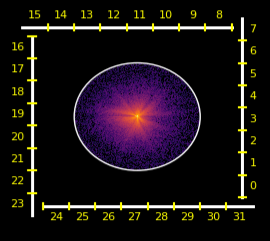
XL-Calibur is a balloon-borne Compton polarimeter designed to measure X-ray polarization between approximately 19 and 64 keV. Incoming X-rays are focused onto a beryllium scattering element (centeral circle) surrounded by cadmium-zinc-telluride detectors (numbered detector columns around the outside).
The direction in which each photon scatters carries information about the polarization of the original X-ray beam. By combining many detected events, we can reconstruct the polarization degree and polarization angle of an astronomical source.
My work focuses on analysis methods for XL-Calibur observations, including detector-response modeling, event selection, timing corrections, and polarization measurements of sources such as the Crab pulsar and Cygnus X-1.
Project 02
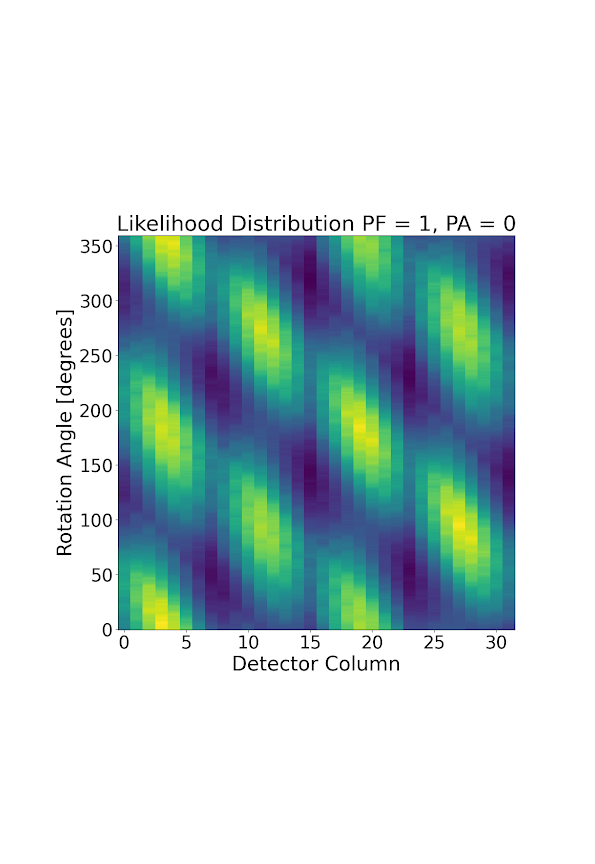
Traditional polarization analyses often combine events into an azimuthal modulation histogram. Although this approach is robust, binning can discard information about the properties of individual events.
I am developing an event-by-event maximum-likelihood framework that evaluates the probability of each photon under a proposed polarization model. The method can include detector location, rotation angle, source position, scattering geometry, and the instrument response.
The goal is to improve statistical sensitivity while carefully controlling bias and systematic uncertainty. The method is validated using large Monte Carlo datasets with known polarization inputs.
Project 03
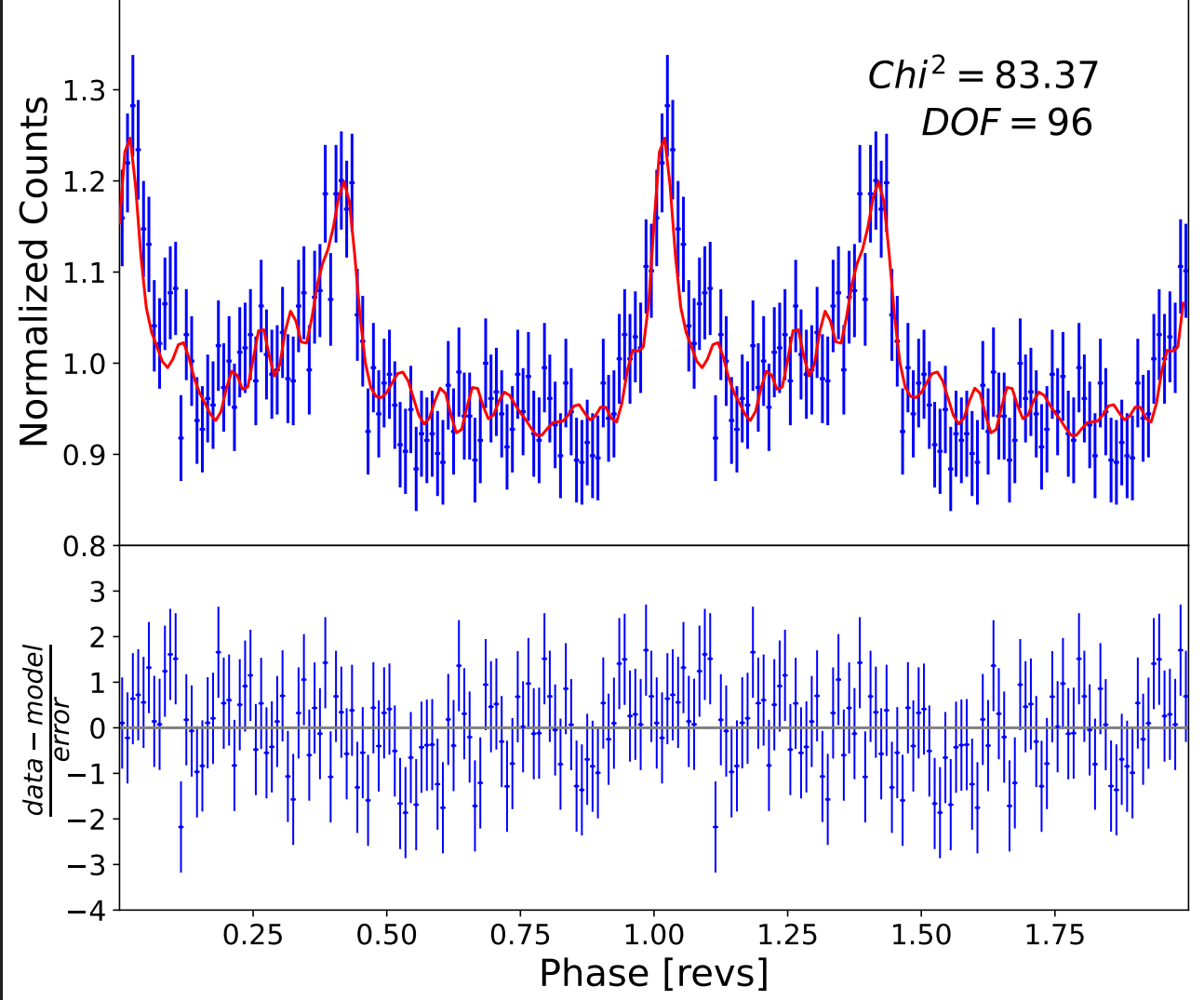
Accurate photon arrival times are necessary for studying the changing polarization signal across a pulsar's rotational phase. During parts of the XL-Calibur flight, interruptions in GPS timing made some events difficult to phase-tag directly.
I developed a timing-recovery method that compares the observed Crab pulse profile with a reference template. The model fits timing offsets and clock evolution using numerical optimization and Markov chain Monte Carlo sampling.
This recovered most of the affected observations and substantially increased the number of photons available for phase-resolved polarization analysis.

Project 04
NASA's Imaging X-ray Polarimetry Explorer, or IXPE, measures polarization in the 2-8 keV energy band. Its observations make it possible to study the geometry of accretion disks, boundary layers, coronae, and magnetic structures close to neutron stars.
I am interested in using IXPE observations of neutron star X-ray binaries to investigate how polarization changes with energy, source state, and accretion geometry.
Combining IXPE's soft X-ray measurements with XL-Calibur's hard X-ray sensitivity can provide a broader view of the physical components producing the observed radiation.
The Measurement
Polarized X-rays preferentially scatter in directions related to the orientation of their electric field. Measuring many scattering events produces a characteristic modulation pattern.
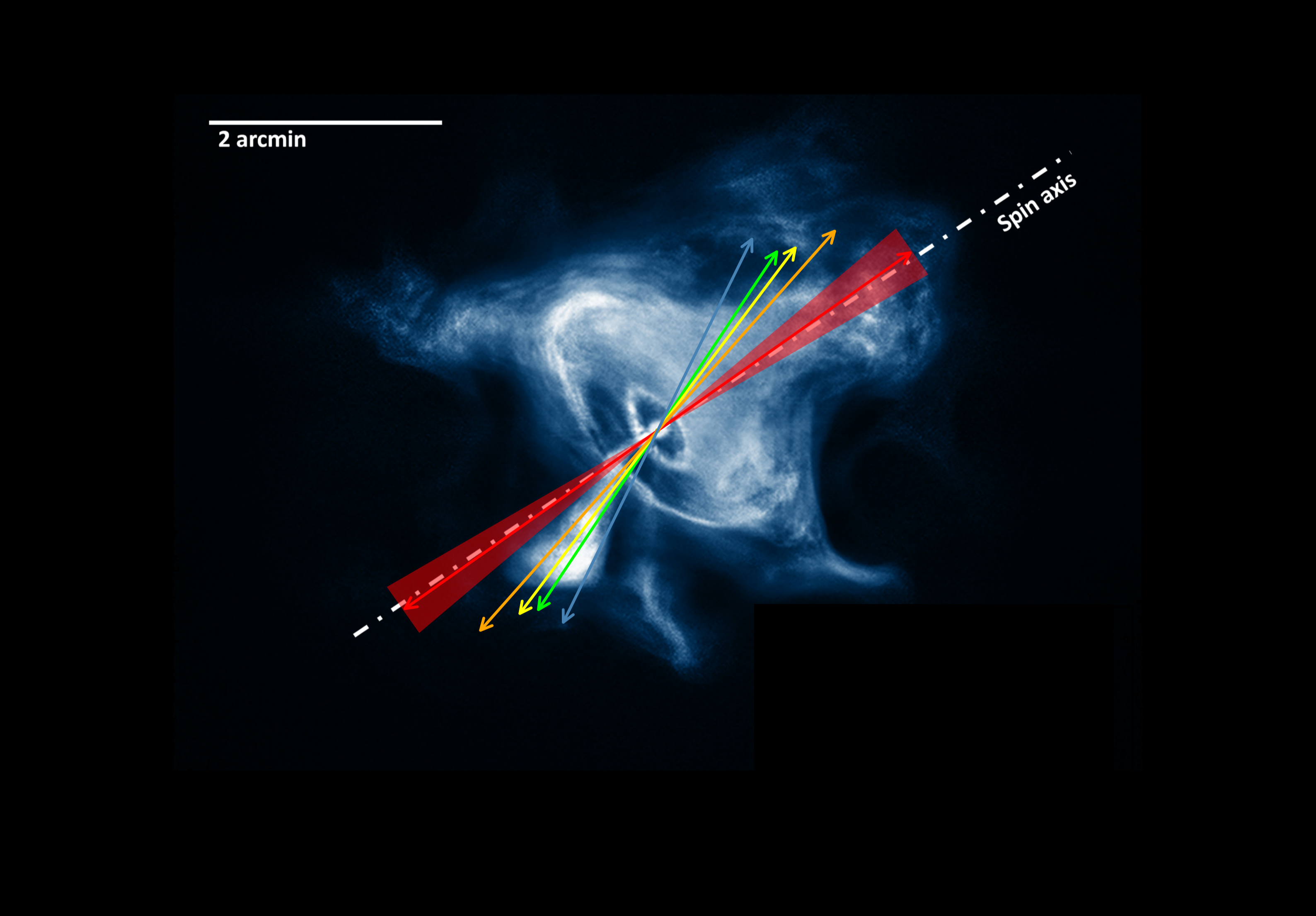
X-rays are produced near a neutron star, black hole, accretion disk, or pulsar wind nebula.
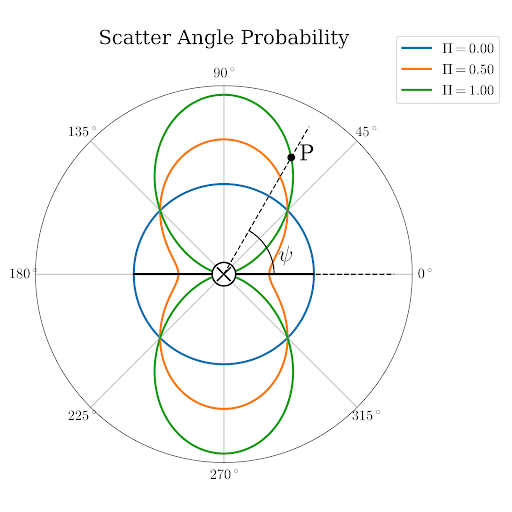
The photon scatters inside the instrument. Its outgoing direction depends partly on the incoming polarization.

Surrounding detectors measure the photon energy, location, and scattering direction.

The distribution of many events reveals the polarization degree and orientation of the source.
Methods
Event reconstruction, detector calibration, pulse profiles, Stokes analysis, background modeling, and polarization fitting.
Maximum likelihood estimation, Bayesian inference, Markov chain Monte Carlo, model comparison, and uncertainty propagation.
Monte Carlo detector simulations, synthetic polarized event generation, response validation, and systematic testing.
Python, NumPy, SciPy, Matplotlib, C++, ROOT, RDataFrame, Git, Linux, and high-performance computing.
Selected Work
2026
In Progress
Manuscript in preparation
Development and validation of an unbinned likelihood framework for extracting polarization information from individual detector events.
Collaboration
I am always happy to discuss X-ray polarimetry, high-energy astrophysics, detector analysis, and scientific computing.